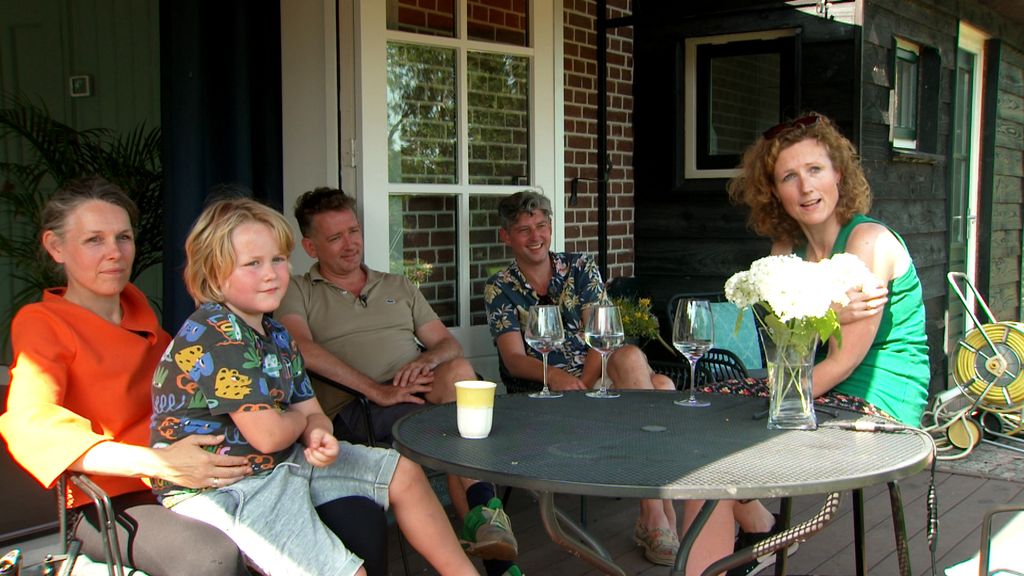
Netherlands Considers Multi-Parenthood: Up to Four Legal Parents
The Netherlands has long been a trailblazer in progressive social policy, consistently pushing the boundaries of what is legally and socially acceptable to better reflect the realities of modern life. In a move that underscores this pioneering spirit, the liberal VVD party has put forth a groundbreaking legislative proposal to formally recognize multi-parenthood, allowing a child to have up to four legal parents. This bold initiative aims to bring Dutch family law into the 21st century, addressing the complex structures of contemporary families and ensuring the legal protection and stability for children raised in diverse households.
The concept of Ouders Maxima – parents with a maximum number of legal guardians – is at the heart of this discussion. It’s not merely about expanding numbers; it's about providing crucial legal recognition and rights to individuals who are already functioning as primary caregivers but currently lack formal standing. This proposed shift acknowledges the changing dynamics of family life, moving beyond the traditional binary parental model to embrace more inclusive and representative legal frameworks.
The Evolving Face of Family: Why Multi-Parenthood?
For many years, the legal definition of parenthood in the Netherlands, as in many other countries, has largely adhered to a two-parent model. However, societal shifts have led to a rise in alternative family structures. We see increasing instances of co-parenting arrangements where, for example, two women and a man collectively decide to raise a child, or two men and a woman form a similar bond. In these situations, while all individuals may actively participate in the child's upbringing, only two can currently be legally recognized as parents.
This discrepancy between de facto and de jure parenthood creates significant hurdles for families. VVD Member of Parliament Ingrid Michon-Derkzen, a proponent of the bill, highlights the practical difficulties faced by these families in everyday life. Issues often arise in critical moments, such as making medical decisions in a hospital, navigating school registration, or managing inheritance matters. Without legal recognition, "third" or "fourth" parents can find themselves without the authority to make decisions for a child they are deeply invested in, leading to unnecessary stress and instability for the family unit.
Michon-Derkzen succinctly put it: "With this initiative, we are legally enshrining what has long been a fact in practice. Legislation lagged behind current practice; with this law, we are rectifying that." This statement encapsulates the core motivation behind the proposal: to align legal frameworks with the lived experiences of many Dutch families, ensuring that the best interests of the child—having all their primary caregivers legally recognized—are paramount.
Navigating the Legal Landscape: Key Provisions and Challenges
The VVD's initiative bill outlines specific criteria for legal multi-parenthood. Central to the proposal is the requirement that any arrangement for multi-parenthood must be explicitly approved by a judge *before* pregnancy occurs. This proactive approach aims to ensure clarity, stability, and mutual agreement among all parties from the outset, preventing potential disputes down the line. The law would allow for a maximum of four parents, distributed across a maximum of two households, offering flexibility for various co-parenting models.
While progressive, the proposal also presents its own set of challenges and limitations. One significant point of contention is that the legal framework for multi-parenthood would only apply to future arrangements made after the law's adoption. This means that families who are already living in multi-parent situations without legal recognition would not be able to retroactively claim legal parentage under this new bill. This exclusion could lead to continued difficulties for a substantial number of existing families, creating a two-tiered system during the transition period.
The discussion around multi-parenthood isn't new; the Dutch House of Representatives has been debating such possibilities since 2016. Previous efforts to legislate multi-parenthood faced hurdles, most notably from former State Secretary Teun Struycken (NSC), who advised against it, citing high potential costs. He estimated approximately 150,000 such families in the Netherlands, implying a considerable financial implication for the state if all were to be legally recognized. However, the current VVD proposal, supported by a majority of the current House of Representatives as part of a "rainbow ballot agreement," suggests renewed political will to overcome these obstacles. The ongoing debate will need to address the economic feasibility, the definition of rights and responsibilities for each parent, and how these new legal structures would integrate with existing social services and legal frameworks.
Holistic Support for Ouders Maxima: Beyond Legal Recognition
While legal recognition is a monumental step, supporting families, regardless of their structure, requires a holistic approach that extends beyond legislative reform. The well-being of children and parents in multi-parent families, or any family, hinges on accessible resources and a supportive community.
Essential Resources for New Parents
Bringing a new child into any family, whether traditional or multi-parent, is a joyous yet challenging experience. Organizations like the Maxima Kledingbank play a vital role in providing practical support to new parents. Through initiatives like their baby box program, parents receive essential items such as clothing, diapers, and care products, not just once at birth, but again when the baby reaches approximately four months old. These thoughtful packages, often curated by Stichting Babyspullen in Heerhugowaard, alleviate some of the initial financial and logistical burdens, allowing parents to focus on bonding with their newborn. This kind of community support is invaluable, and its importance only grows when considering the potentially complex dynamics of multi-parent households, where resources and support networks might need to be more expansive.
Balancing Work and Family for All Parents
Parenting is a demanding role, regardless of how many individuals share the responsibility. For many adults, especially as they get older, balancing professional commitments with family life becomes a critical consideration for their overall well-being and cognitive performance. Recent research from the Melbourne Institute of Applied Economic and Social Research suggests that for individuals over 40, working beyond 30 hours per week can lead to a significant decline in cognitive performance. In fact, working 55 hours or more per week was found to be more detrimental to cognitive function than being unemployed or retired.
This research has profound implications for all parents, including those in multi-parent arrangements. While multi-parenthood might intuitively suggest a better distribution of childcare and household responsibilities, enabling individual parents to maintain a healthier work-life balance, it's not a given. The reality for Ouders Maxima would likely involve careful planning and open communication to ensure that each parent can optimize their working hours, ideally adhering to the recommended maximum of 30 hours per week for peak performance, especially if they are over 40. This consideration underscores the need for employers and society at large to adapt to diverse family structures, promoting flexible work arrangements that support the well-being of all caregivers.
Future Implications and What Lies Ahead
Should the Netherlands adopt this multi-parenthood legislation, it would solidify its position at the forefront of social progress. Such a law would not only provide legal certainty and stability for thousands of children and families within its borders but could also serve as a blueprint for other nations grappling with similar challenges. The journey from debate to legislation will undoubtedly involve further parliamentary discussions, public engagement, and careful consideration of all potential impacts—social, legal, and financial.
Ultimately, the goal is to create a legal framework that truly reflects the reality of diverse families and prioritizes the well-being of children by ensuring all significant caregivers have legal standing. The Netherlands' exploration of Ouders Maxima is more than just a legal adjustment; it's a testament to a society striving for greater inclusivity and a deeper understanding of what constitutes a family in the modern world.
In conclusion, the VVD's initiative to recognize multi-parenthood with up to four legal parents marks a significant moment in the evolution of family law. By seeking to formalize what is already a lived reality for many, the Netherlands is once again demonstrating its commitment to progressive values and the best interests of its citizens. While challenges remain, the potential benefits for stability, security, and well-being for countless children in diverse family structures are immense, making this a pivotal step towards a more inclusive future for Ouders Maxima and beyond.